Rwanda
Close encounters with primates in Africa's verdant highlands.
OVERVIEW
A THOUSAND HILLS, WITH A BEATING HEART
At dawn just before the day breaks, you’ll hear the rhythm beneath Rwanda’s thousand terraced hillsides, a pulse carried on mist and eucalyptus-scented air. This is a country that has rebuilt itself, each green ridge folding into the next. Today, it stands as one of the continent’s safest, cleanest and most hospitable destinations.
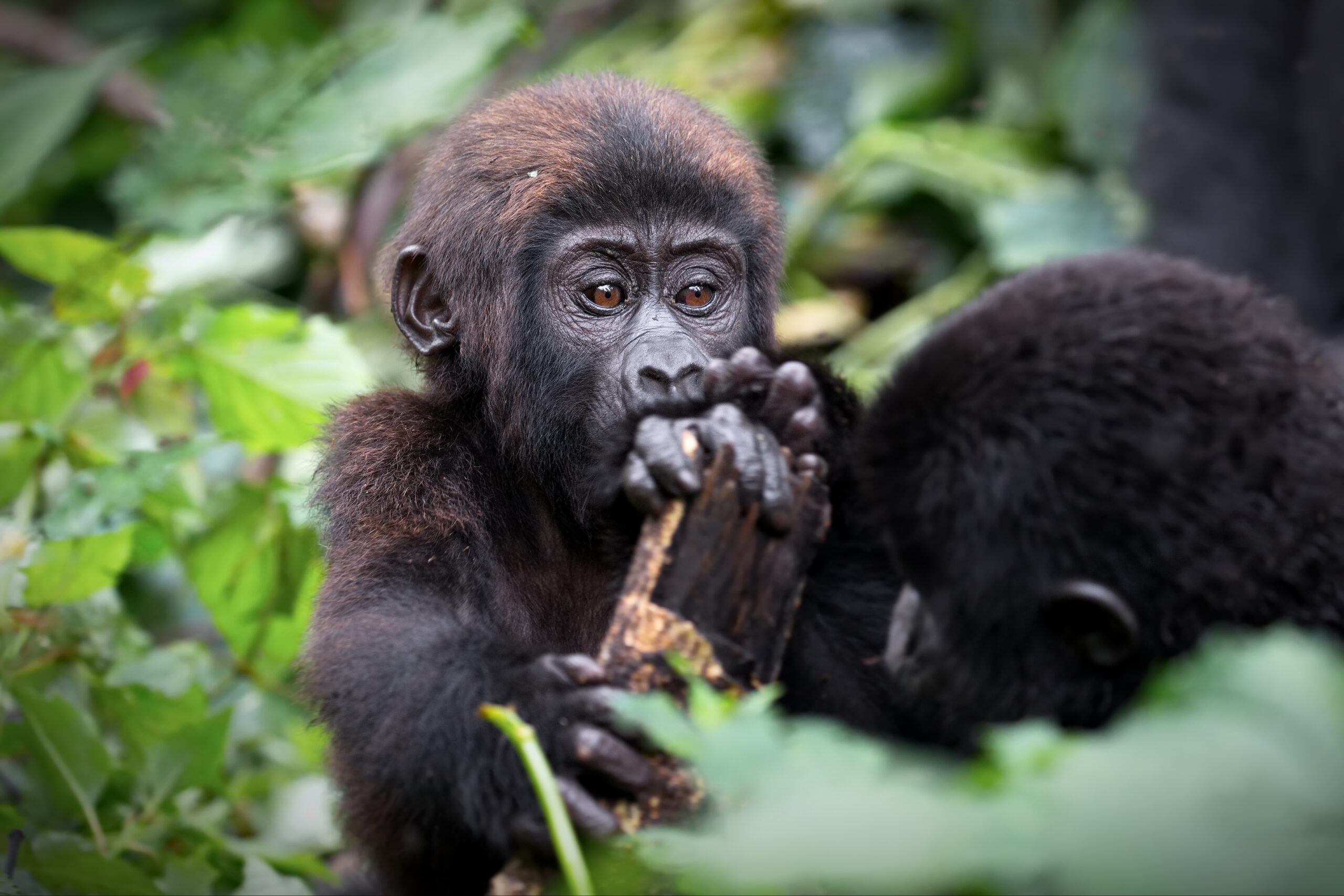
That heartbeat quickens deep in the bamboo forests of Volcanoes National Park. Following your guides along steep, mist-veiled trails, through mountain gorilla family going about their morning; youngsters wrestling in the undergrowth while the silverback looks on with quiet command. It’s rare and one of the most extraordinary wildlife encounters. Beyond the gorillas, Rwanda holds further surprises: golden monkeys leaping through bamboo canopies, chimpanzees calling through the ancient trees of Nyungwe, and the wide savannahs of Akagera where some of the big five roam.
Rwanda’s story runs deeper still. In Kigali, a visit to the Kigali Genocide Memorial Centre offers a profound and necessary reckoning with the country’s history and its extraordinary journey toward healing. Nearby, exploring Nyamirambo reveals a different side of the capital entirely, rich with culture, everyday life and history, among other memorable excursions. Further afield, an experience with the Batwa Village offers a rare window into the traditions of one of Africa’s oldest tribes.
By Lake Kivu, the pulse softens. Terraced coffee and tea plantations tumble down to the water’s edge, where lakeside towns invite long, slowed days of boat trips and fresh-brewed cups grown just up the hill. Every visit here carries weight beyond the moment. Rwanda’s community-led model channels tourism directly back into the land and its people, making this a journey defined as much by purpose as by beauty.
OUR SIGNATURE Rwanda SAFARIS
East Africa Signature Safari
Discover the beauty and diversity of Kenya’s landscapes with an itinerary that includes the stunning scenery of the Rift Valley…
Read morePlanning
BEST TIME TO VISIT RWANDA
Rwanda’s high altitude means temperatures stay pleasantly consistent year-round; rarely too hot, with highs around 26–27°C (79–80°F). That said, two dry seasons offer the best trekking conditions and are the most popular times to visit, particularly for gorilla trekking, Rwanda’s flagship experience.
June – September (Peak Dry Season)
This is the best all-round window to visit. Trails are drier and easier to navigate, skies are generally clear, and wildlife viewing in Akagera is at its best as animals cluster near water sources. It’s also the lowest risk period for malaria. Unsurprisingly, this is peak tourist season, therefore, gorilla permits and accommodation should be booked well in advance. September also brings Kwita Izina, Rwanda’s much-loved gorilla naming ceremony in Musanze.
December – February (Short Dry Season)
A second, shorter dry spell offering good trekking conditions with noticeably fewer crowds than the June–September peak. Landscapes are lush and green following the rain, and gorilla trekking remains excellent. This is a great choice for travelers seeking similar conditions with a quieter experience. December is especially popular as an alternative Christmas or New Year escape.
March – May & October – November (The Rainy Seasons)
March to May marks the longer rainy season, with heavier, more persistent rainfall and muddier trails, while October and November bring shorter, more intermittent showers. Trekking is still possible in both periods, just more strenuous underfoot. The reward: Rwanda at its most vividly green, significantly fewer visitors, lower rates, and for keen birdwatchers, some of the best sightings of the year, as migratory species pass through.
EXTEND YOUR Rwanda SAFARI