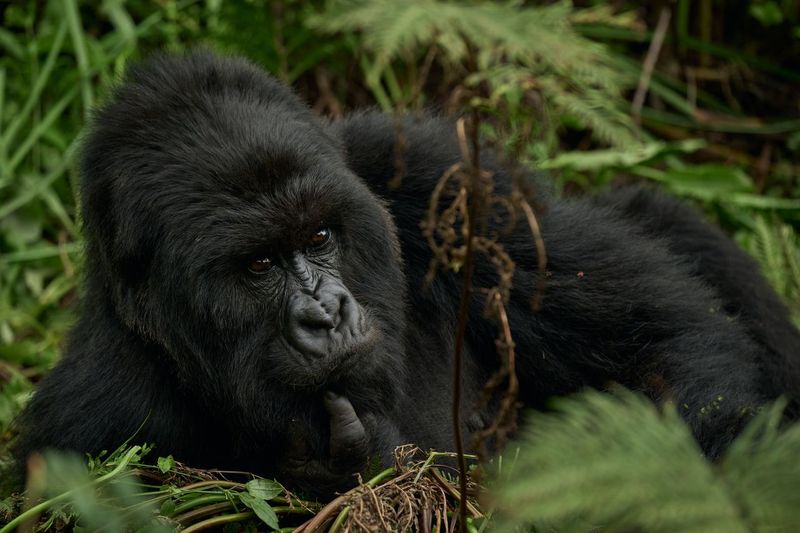
Best time to go gorilla trekking in Uganda
There’s nothing quite like sitting with a family of mountain gorillas as they munch bamboo shoots and tumble around in the undergrowth of Uganda’s ancient tropical forests. It’s definitely one of life’s moments. Yet this enchanting scene might not feel quite so cosy with the rain lashing down and the mud seeping into your socks, so getting your timing right is everything.
Gorilla trekking in Uganda is one of the most exhilarating wildlife experiences you can enjoy in East Africa. The national parks in the southwestern highlands are home to over half of the world’s mountain gorilla population, so these are the places to come if you want a close encounter with our forest ancestors.
You can go gorilla trekking in Uganda at any time of year, but some months are better than others, especially if you’re not a fan of slippery trails and soggy trousers. Below, we’ll share our tips on the best time to see gorillas in Bwindi Impenetrable Forest and Mgahinga Gorilla National Park, as well as advice on when to buy permits and the perks of visiting outside of peak season.
Wet or dry: Uganda’s gorilla trekking seasons
Uganda’s equatorial climate means that temperatures remain consistent, so it’s the rainfall you need to consider when booking gorilla treks in Bwindi or Mgahinga. The rainforests here are always wet, but conditions fluctuate throughout the year, ranging from mostly dry to extremely wet.
The long dry season runs from June to September, while the short dry season is between December and February. These are the most popular months for gorilla treks in Uganda. The long rains arrive in March and last until May, with a shorter wet season making an appearance in October and November. The gorillas don’t seem to mind the weather and remain here all year round.
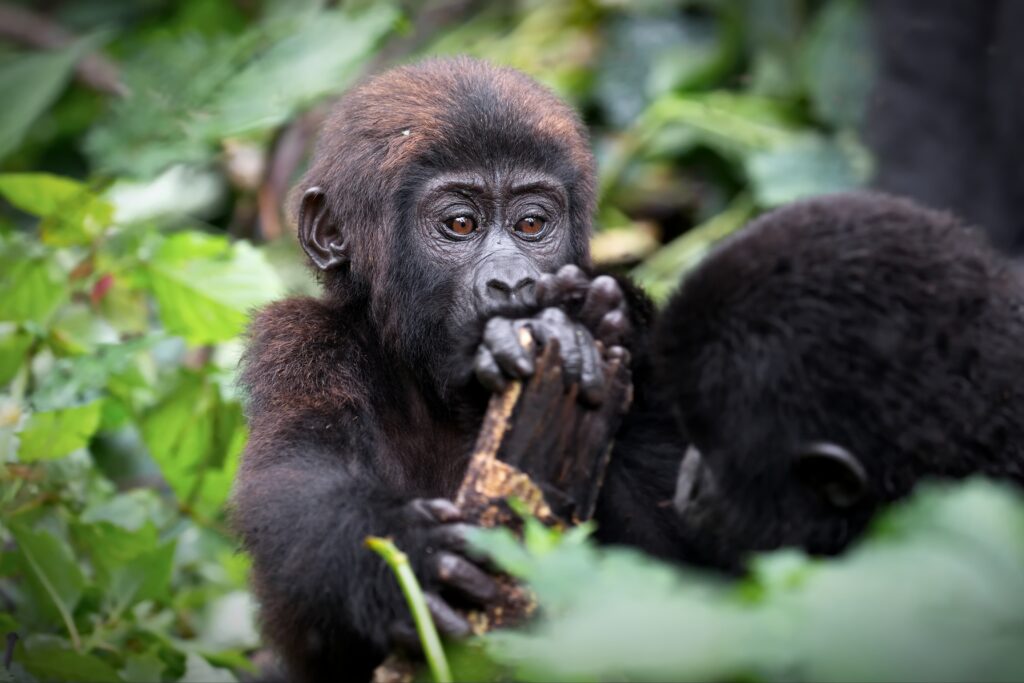
What is gorilla trekking like in the dry season?
The best time to go gorilla trekking in Uganda is during the dry months, when conditions are more comfortable and the trails feel firmer underfoot. Skies are often sunny with great visibility, so if it’s views you’re after, this is the time to come. There may be a bit of rain, but it’s usually short-lived.
This lovely dry weather does come at a cost, with lodge rates at their highest between June and September. It’s peak season, so gorilla permits need to be booked well in advance, sometimes over a year before your trek. Parks are busier too, although it never feels crowded in Bwindi or Mgahinga, since visitor numbers are strictly controlled.
Food is less abundant during the dry months, so the gorillas cover greater distances in their search for sustenance. This means they’re often found higher up the mountain slopes, sometimes making treks longer than during the wet season.
Can you go gorilla trekking in the wet season?
Absolutely! Muddy trails are all part of the adventure during the rainy months, and you will get wet, even if you manage to dodge the daily downpours. The forests are permanently damp, and the dripping foliage is an ever-present reminder that this is most certainly waterproof season.
Yet the wet season has its charms too, and if you don’t mind a challenge, this can be a rewarding time to visit. The forests are lush and awash with floral blooms and birdsong, while fewer visitors tramping along the trails make your experience feel more exclusive. Rates for lodges tend to be cheaper than in the dry season, and there’s better availability for rooms and gorilla permits, so you don’t need to book so far ahead. It rains less in October and November than it does between March and May, so coming in those months could be a worthy compromise.
If you’re feeling daunted by the prospect of a long, steep trek, the wet season could be a good time to come. During these months, gorillas are often found feeding in the lower reaches of the forest, so treks can be shorter.
Month-by-month overview
December – February (short dry season): Dry and warm with little rain and good visibility. Great trail conditions make trekking easier. Gorillas are higher up the slopes, so hikes can be longer. Permits need to be booked well in advance, especially over the Christmas period.
March – May (long wet season): Wet and humid with frequent downpours. Trails are slippery, making treks challenging, but the foliage is lush. Gorillas stay lower down the slopes, so hikes can be shorter. Lodging is cheaper, permit availability is greater, and parks are quieter.
June – September (long dry season): Dry, warm, and sunny with very little rain and superb visibility. Trails are firm underfoot and treks are longer with gorillas preferring the upper slopes. Parks are busier and lodge rates rise. Gorilla permits need to be booked well in advance.
October – November (short wet season): Showers are frequent but not as heavy as in the long wet season. Treks can be challenging with muddy trails. Greater gorilla permit availability and cheaper lodging.
What is the best month for gorilla trekking in Uganda?
We love gorilla trekking at any time of year, and choosing when to go is a personal thing, but if pushed, we’d say June. The trails are drying out, but the foliage is still vibrant after the rains, and there may be a bit of lingering mist for that ethereal forest experience. You’ll be visiting before the peak months of July and August, so it’ll be a bit quieter too.
How far in advance do you need to book gorilla trekking permits?
To protect the endangered mountain gorilla population in Uganda, a permit system is in place to control visitor numbers. There are only eight trekking permits issued per gorilla family each day, so availability is limited. Bwindi has a far greater number of habituated groups, so your chances of getting a permit are higher here than in Mgahinga, which has just one.
During the peak dry seasons from June to September and December to February, gorilla permits need to be reserved well in advance, sometimes over a year before your trip. In October and November, booking 3-6 months ahead is usually sufficient. Meanwhile, in the long wet season between March and May, permits are more readily available at shorter notice.
What is the cheapest month to see gorillas in Uganda?
If you’re looking for a budget-friendly gorilla trekking experience in Uganda, then consider April, which is the wettest month. It offers both value and adventure for intrepid explorers who don’t mind dealing with muddy trails and heavy rain showers.
While gorilla permits are the same price all year round, lodge rates are lower during the wet season, particularly in April, so this is the month to grab a bargain.
Which months are best to combine gorilla trekking with a safari?
The dry season between June and September is the best time to combine gorilla trekking and game drives in parks across southern Uganda and neighbouring Kenya or Tanzania.
Wildlife viewing is excellent during these months, with sparse vegetation and fewer watering holes making animals easy to spot. The Great Migration is moving around the plains of the Serengeti and Masai Mara, and it’s a great time to see the famous tree-climbing lions in Uganda’s Queen Elizabeth National Park.
So, when is the best time to go gorilla trekking in Uganda?
Ultimately, deciding when to see gorillas in Uganda depends on more than just the weather. Factors like budget, visitor numbers, permit availability, and other safari activities all play a part. If you want dry trails, come between June and September or December and February. If you prefer lower rates and don’t mind the wet, then October, November, and March to May are worth considering.
It’s important not to get too hung up on the weather, since gorilla encounters are special at any time of year. As long as you’re prepared for a bit of rain, you’ll have an experience to remember no matter when you visit.
Still not sure when to come? Chat with one of our Uganda specialists, and we’ll help you come up with a plan.